
Massachusetts Rodent Control Specialists
Mice & Rat Control
Professional rodent exterminators serving Eastern Massachusetts since 1993. We inspect for mouse and rat activity, seal the openings they are getting in through with material they cannot chew, and set up a tamper-resistant baiting system that eliminates the infestation — not just the few you happen to see.

Massachusetts Rodent Control Specialists
Mouse Extermination in MA

Security Pest Elimination will send out a licensed pest control tech to perform a rodent inspection. While there we also perform a free inspection for wood destroying insects such as termites, carpenter ants and powder post beetles. The rodent inspection includes checking for signs of mice or rat activity and for openings they may be using. If a main above-ground entry point is found, we can seal it with a material mice can’t chew through. We then set up a tamper-resistant baiting system that will eliminate the rodent infestation. Our mouse baits are highly palatable even if the mice already have a food source stored inside your walls or above your ceilings, and we have different bait formulations for different locations.
*Mouse traps are not the best way of eliminating mice. They are best used for mouse control, not mice elimination — they tend to catch just some of the careless juvenile mice, not many of the adults. Using mouse traps for an infestation is an ongoing measure requiring constant removal of dead mice, so for customers who want their homes cleared as quickly as possible, traps are not a viable option.
The Problem
Are There Mice Living in My House?
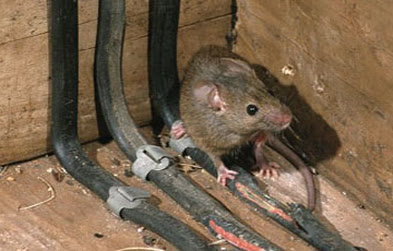
House mice are the most common rodents found living within structures in Massachusetts, particularly in the fall and winter. Mice can chew through anything softer than their teeth — and their teeth grow up to five inches a year — so they turn on pipe work, structural materials and electrical cables, and damaged wiring is a recognised fire risk.
The greatest economic loss from mice is not what they eat but what has to be thrown out because of contamination. They are incontinent and foul wherever they travel, so droppings and fur contaminate food preparation surfaces and foodstuffs. If you see house mice in the daytime, that indicates a large infestation.
Warning Signs to Watch For
Droppings
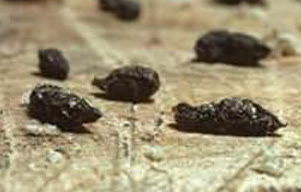
Dark and pointed at both ends, 1/8 to 1/4 inch long.
Sounds after dark
Running, gnawing or squeaking inside walls and ceilings.
Gnaw damage
Chewed wiring, pipe work, stored food and packaging.
Nests
Shredded paper or bits of cloth tucked into hidden corners.
Pets at the walls
Cats staring or pawing at cabinets where mice are hiding.
How It Works
Our Rodent Control Process
01
Rodent Inspection & Identification
A licensed technician checks for mouse and rat activity, identifies the species, and maps the openings they are getting in through — with a free wood-destroying insect inspection while on site.
02
Sealing & Targeted Baiting
Main above-ground entries are sealed with a material mice cannot chew, then tamper-resistant stations go in with the right bait formulation for each location, whether that is inside a wall, above a ceiling or in the basement.
03
Follow-Up & Long-Term Protection
We come back to confirm the infestation is gone and keep the structure protected — with no traps left behind for you to empty, which only ever catch a few careless juveniles anyway.
Insect Information
Rodent Facts

House mice produce 6–10 litters of 5–10 pups a year
Mouse teeth never stop growing — up to 5 inches a year
Mice can jump down 12 feet without injury
A full-grown mouse weighs between 1/2 and 1 ounce
Mice may visit 20 to 30 food sites every night
Their whiskers sense texture, temperature and breezes
The average mouse lives under 18 months
US rodents cause more than one billion dollars of damage a year
Mouse tails have scales that help them climb
Mice squeak above the range of human hearing
Mice see best in dim light — weak eyes, acute other senses
Mice can scale rough walls and walk along thin ropes and wires
Mice will consume almost any food they find
House Mouse Damage
House mice gnaw through electrical wiring, causing fires and the failure of freezers, clothes dryers and other appliances. Food, clothing, furniture, books and many other household items are contaminated by droppings and urine, or damaged by gnawing.
Pet food or other food that mice have stored in your walls and ceilings can later lead to a pantry pest infestation, such as Indian meal moths and various other types of grain beetles. That is another reason to get rid of a mice infestation as quickly as possible.
White Footed & Deer Mice
There are three species of mice in New England that enter our homes: house mice, white-footed mice and deer mice. It is the white-footed mouse in eastern North America that is the most common host for the bacteria causing Lyme disease and the ticks that transmit it, and like the deer mouse it may also carry hantaviruses. Compared with house mice, white-footed and deer mice have larger eyes and ears and lack the characteristic mousy odour.
Their principal problem is a tendency to enter homes, sheds, garages and other structures that are not rodent-proof. There they build nests, store food and cause considerable damage to upholstered furniture, mattresses, clothing, car interiors and paper. They have a greater tendency to cache food such as acorns, seeds or nuts than house mice do, and are common in suburban areas with open space nearby.
Cleaning Mouse Droppings
When cleaning areas previously used by mice, take precautions to reduce exposure to dust, excreta and carcasses. Where deer mice or related species may be reservoirs of hantaviruses, spray the area thoroughly with a disinfectant or diluted household bleach before any sweeping, vacuuming or handling of surfaces. Use protective clothing including vinyl or latex gloves, and contact the CDC hotline for current recommendations.
Ultrasonic Devices & Repellent Chemicals
There are no known methods for keeping house mice, white-footed or deer mice out of structures by means of sound. Ultrasonic devices sold and advertised to control rodents have not proven to give satisfactory control — at best they move the mice from one wall to another.
Moth balls or flakes (naphthalene) may repel mice from closed areas where a sufficient concentration can be reached in the air. These materials are not registered for repelling mice, however, and will leave your home smelling foul for years.
Mice Control Tips
- Place dog food, birdseed and human food inside rodent-proof containers
- Keep shrubs, vines and tree limbs trimmed away from structure
- All gaps should be less than 1/4 inch to prevent entry
- Door thresholds and frames fitted with gaskets or brush shields
- Utility openings sealed with sealant or pipe collars (escutcheon plates)
- Do not stack lumber, firewood, bricks, pipes or other debris next to foundation
- Vents (attic, crawl and dryer) covered with mesh screen (< 1/4-inch)
- Storage areas organized and clutter-free with access to perimeter walls
- Garbage removed daily and stored outside in closed containers
Common Norway Rat
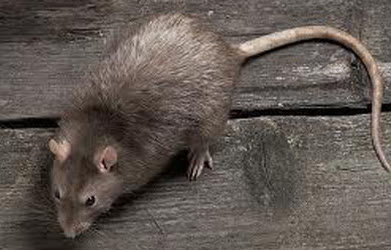
The rats found in Massachusetts are called brown rats, street rats, sewer rats, Hanover rats, Norway rats or wharf rats, but they are all the same species (Rattus norvegicus). The Norway rat has a body length up to 10 inches and a similar tail length; males average 12 oz and females 9 oz. Despite the name, brown rats in New England originated from northern China, not Norway.
The fur is coarse and usually brown or dark grey, with lighter grey or brown underparts. A very large brown rat can reach 32 oz. Rats weighing over 32 oz are rare, and stories of rats as big as cats are exaggerations or misidentifications of other rodents such as the much larger muskrat.
Rat Biology and Behavior
The Norway rat is extremely adaptable and once indoors can nest in wall or ceiling voids, crawlspaces, attics, or inside furniture and stored items. A young rat can gain entry through an opening only slightly larger than 1/2 inch. They travel along pipes or conduits, climb brick or rough walls, and can gnaw through building materials including cement block. They sometimes enter buildings through sewer lines and have been known to come straight up through the toilet.
The brown rat is nocturnal and a good swimmer, both on the surface and underwater. They live in large groups in burrows or subsurface places such as sewers and cellars, and burrow extensively, generally starting a new burrow next to an object or structure — which makes cement foundations a favoured location.
Diet, Reproduction and Life Cycle
The brown rat is a true omnivore and will consume almost anything. They can chew through almost all food packaging containers. Their teeth are very hard and grow continuously, so they chew constantly to keep them from growing too long.
Brown rats can breed throughout the year if conditions are suitable, with a female producing up to five litters a year. Gestation is about 21 days and litters can number up to 14, though seven is most common. They reach sexual maturity in about five weeks and normally live one to two years, sometimes up to three.
Rat Diseases
There are numerous diseases that domestic or wild rats can spread. One sometimes fatal disease is rat-bite fever; scratches and contact with rat urine and faeces can also expose you to it. The Humane Society of the United States notes that, aside from mosquitoes, rats carry more diseases transmissible to humans than almost any other living thing. Besides rat-bite fever, the most common are leptospirosis, salmonellosis and plague.
Common Questions
Rodent Control FAQs
Fresh mouse droppings are dark, 1/8 to 1/4 inch long and pointed at both ends. You may also hear running, gnawing or squeaking after dark, find nests of shredded paper or cloth, or notice your cat staring at a wall or cabinet. Seeing mice in daylight usually means a large infestation.
Traps are good for mouse control, not mouse elimination. They tend to catch the careless juveniles rather than the adults, so they become an ongoing chore of removing dead mice. Correct baits in the right locations clear the infestation instead.
No. There is no known method of keeping house, white-footed or deer mice out of a structure using sound, and commercially sold ultrasonic devices have not proven to give satisfactory control. At best they move the mice from one wall to another.
Both. Mice gnaw electrical wiring, which is a recognised fire risk, and the greater loss is usually contamination rather than what they eat. They can spread salmonellosis, rickettsialpox and lymphocytic choriomeningitis, and exposure to mouse faeces can trigger asthma. White-footed and deer mice may also carry hantaviruses.
Norway rats are larger, can enter through an opening only slightly bigger than half an inch, and will travel along pipes, climb rough walls and even come up through sewer lines. Control usually needs several strategies together — baiting, sometimes trapping, and rat-proofing to keep them out.
Service Area
Towns We Perform Rodent Control Services In
- Acton, MA
- Arlington, MA
- Ashby, MA
- Ashland, MA
- Auburndale, MA
- Ayer, MA
- Bedford, MA
- Belmont, MA
- Billerica, MA
- Boxborough, MA
- Burlington, MA
- Cambridge, MA
- Carlisle, MA
- Chelmsford, MA
- Chestnut Hill, MA
- Concord, MA
- Dracut, MA
- Dunstable, MA
- Everett, MA
- Framingham, MA
- Groton, MA
- Holliston, MA
- Hopkinton, MA
- Hudson, MA
- Lexington, MA
- Lincoln, MA
- Littleton, MA
- Lowell, MA
- Malden, MA
- Marlborough, MA
- Maynard, MA
- Medford, MA
- Melrose, MA
- Natick, MA
- Newton, MA
- Newton Highlands, MA
- North Reading, MA
- Pepperell, MA
- Reading, MA
- Sherborn, MA
- Somerville, MA
- Stoneham, MA
- Stow, MA
- Sudbury, MA
- Tewksbury, MA
- Townsend, MA
- Tyngsborough, MA
- Wakefield, MA
- Waltham, MA
- Watertown, MA
- Wayland, MA
- Westford, MA
- Weston, MA
- Wilmington, MA
- Winchester, MA
- Woburn, MA
- Amesbury, MA
- Andover, MA
- Beverly, MA
- Boxford, MA
- Bradford, MA
- Byfield, MA
- Danvers, MA
- Essex, MA
- Georgetown, MA
- Gloucester, MA
- Groveland, MA
- Hamilton, MA
- Haverhill, MA
- Ipswich, MA
- Lawrence, MA
- Lynn, MA
- Lynnfield, MA
- Magnolia, MA
- Manchester-by-the-Sea, MA
- Marblehead, MA
- Merrimac, MA
- Methuen, MA
- Middleton, MA
- Nahant, MA
- Newbury, MA
- Newburyport, MA
- North Andover, MA
- Peabody, MA
- Rockport, MA
- Rowley, MA
- Salem, MA
- Salisbury, MA
- Saugus, MA
- Swampscott, MA
- Topsfield, MA
- Wenham, MA
- West Newbury, MA
- Avon, MA
- Bellingham, MA
- Braintree, MA
- Brookline, MA
- Canton, MA
- Cohasset, MA
- Dedham, MA
- Dover, MA
- Foxborough, MA
- Franklin, MA
- Holbrook, MA
- Medfield, MA
- Medway, MA
- Millis, MA
- Milton, MA
- Needham, MA
- Norfolk, MA
- Norwood, MA
- Quincy, MA
- Randolph, MA
- Sharon, MA
- Stoughton, MA
- Walpole, MA
- Wellesley, MA
- Westwood, MA
- Weymouth, MA
- Wrentham, MA
- Ashburnham, MA
- Auburn, MA
- Berlin, MA
- Blackstone, MA
- Bolton, MA
- Boylston, MA
- Charlton, MA
- Clinton, MA
- Douglas, MA
- Dudley, MA
- Fitchburg, MA
- Gardner, MA
- Grafton, MA
- Harvard, MA
- Hopedale, MA
- Hubbardston, MA
- Lancaster, MA
- Leominster, MA
- Lunenburg, MA
- Mendon, MA
- Milford, MA
- Millbury, MA
- Millville, MA
- Northborough, MA
- Northbridge, MA
- Oxford, MA
- Southborough, MA
- Sterling, MA
- Sutton, MA
- Upton, MA
- Uxbridge, MA
- Westborough, MA
- West Boylston, MA
- Worcester, MA
Don’t see your town listed? Please call to see if we service that area.
Related Service