
Massachusetts Termite Control Specialists
Termite Control
& Treatment
Security Pest Elimination provides termite control and termite inspection services throughout Massachusetts. We provide termite pest inspection reports and free termite control quotes for customers. Our termite treatments provide fast, complete termite extermination from your home and are covered by our service agreement. Our termite techs have over 20 years of hands on experience!

Massachusetts Termite Control Specialists
Fast Acting, Long Lasting Termite Treatments
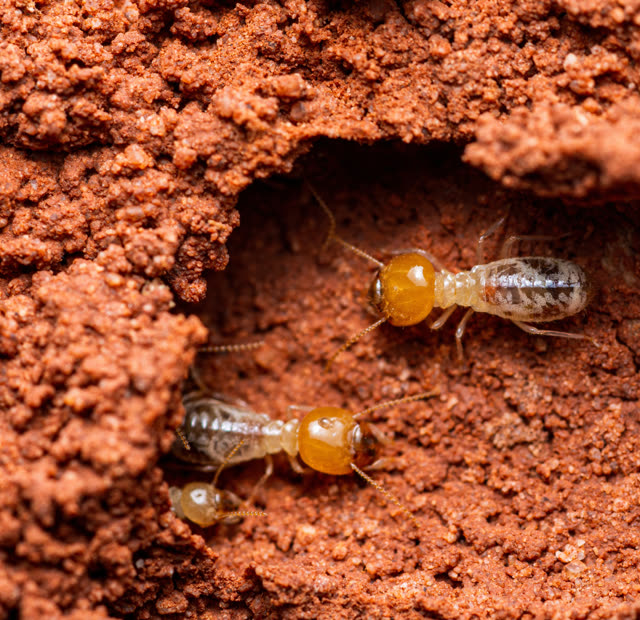
The best termite treatments today for complete termite extermination use a low-odor, non-repellant liquid that termites can’t detect (unlike the older type liquids that were repellant and termites could circumvent)*. It is applied deep into the soil, next to your exterior foundation, all the way around your house. We use soil injection rods to do this part of the treatment. Since the termite workers can’t detect this new liquid treatment, they keep tunneling through it. They then get it on their bodies and end up carrying the treatment back to the main colony. It then spreads from termite to termite by contact and quickly eliminates the entire termite colony.
*Security Pest Elimination switched to this type of termite elimination treatment back in September of 2000 when it first became available. If properly done, this type of termite treatment, will quickly kill off the termite colony (usually 30 to 60 days) including the queen. In most cases, we no longer need to treat inside your home. The inside treatment if needed, is only applied to the inside area if current termite activity is noted, or another highly susceptible area (i.e. a finished basement wall next to an area found to have termite activity). If an inside area needs to be treated, but has expensive flooring that the customer doesn’t want disturbed, we have specialized equipment to inject a termite treatment into a wall as a foam through a small 1/4″ hole.
The Problem
Termites Cause Billions in Damage Every Year
Left untreated, a termite colony works silently inside your walls, floors and framing — often for years before you notice. In New England’s climate, subterranean termites are the most common and destructive threat to a home’s structure.
Our licensed technicians locate the colony, treat it at the source, and set up a protective barrier so the problem doesn’t come back — and the work is covered by our service agreement.
Warning Signs to Watch For
Mud tubes
Pencil-width dirt tunnels on foundation walls or crawl spaces.
Swarmers
Winged termites or discarded wings near windows and doors in spring.
Hollow wood
Timber that sounds hollow or crumbles when tapped.
Bubbling paint
Uneven or blistered paint that resembles water damage.
Frass
Small piles of sawdust-like droppings near wooden structures.
How It Works
Our Termite Treatment Process
01
Free Termite Inspection
A licensed technician inspects the full interior and exterior of your home, locating active termite workings and the moisture and wood-to-soil conditions that invite them in.
02
Targeted Colony Treatment
We apply a low-odor, non-repellent liquid where the colony is working — injected into the soil around your foundation, or as a foam through a ¼-inch hole in a wall — to eliminate it at the source.
03
Prevention & Warranty
A protective perimeter barrier and residuals keep foragers from coming back, and the work is covered by our service agreement.
Insect Information
Termite Facts
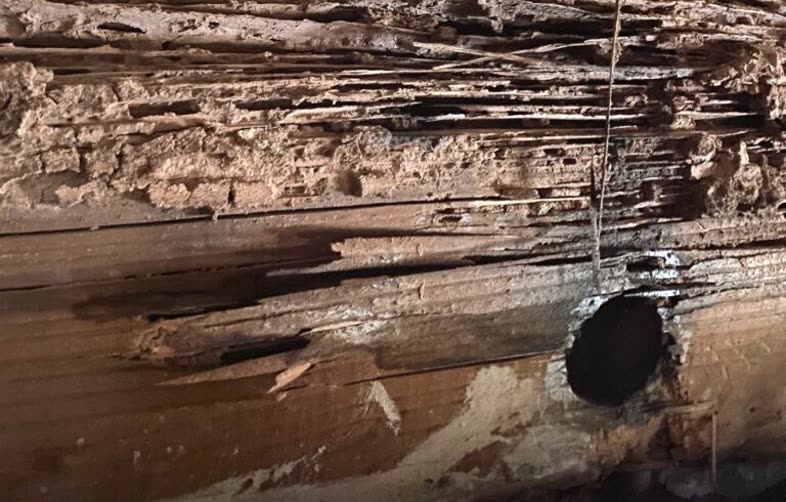
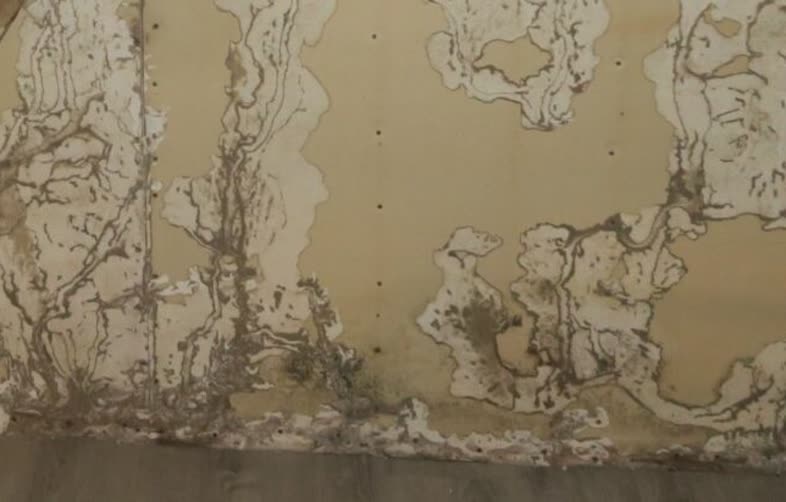
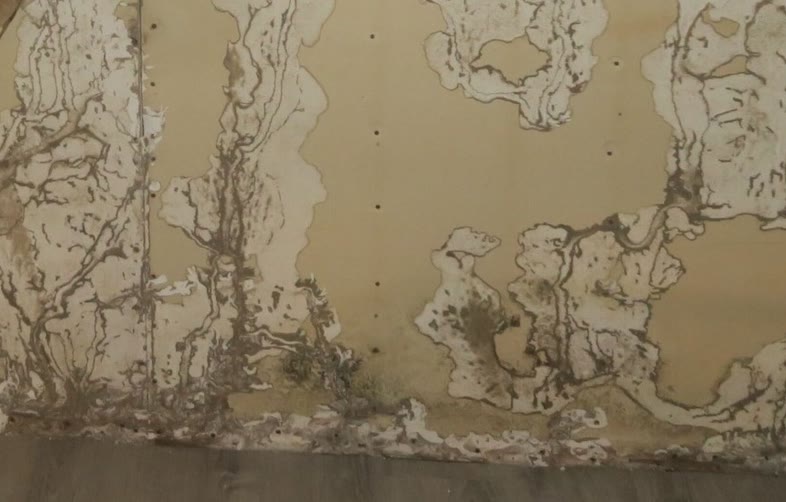
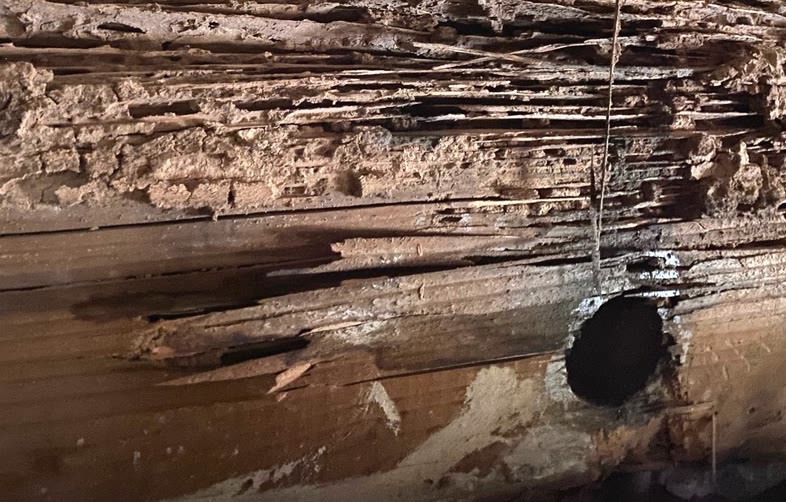
They will eat tree stumps right next to the house
They tunnel unseen between wall sheetrock
Basement ceiling beams are a common damage point
Worker termites are blind and feed around the clock
They live in every U.S. state except Alaska
Termites stay active year-round, not just in spring
A new colony takes 3–5 years to produce swarmers
Most homeowners insurance won’t cover termite damage
Termite Colony Information
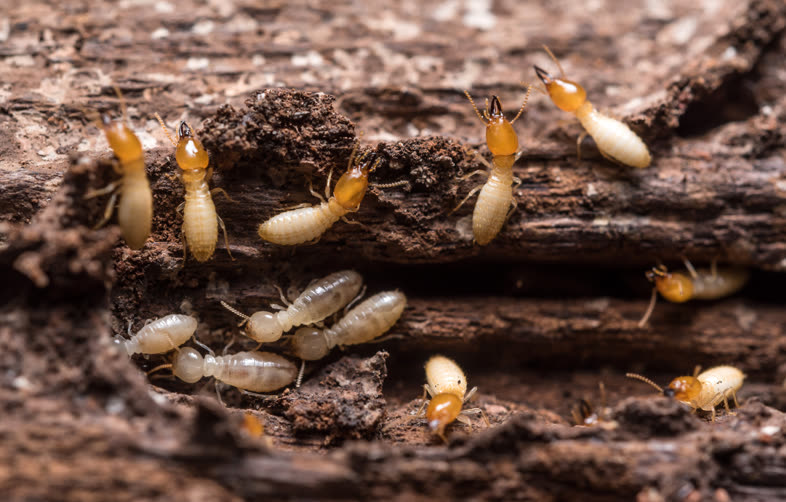
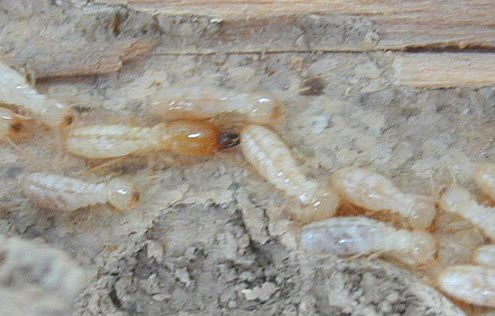
The Eastern Subterranean Termites is the variety which we must deal with in the Massachusetts Area. The termite colony lives underground with a king and queen, which can live up to 25 years. The termite colony consists mainly of termite workers, which are responsible for the termite damage done to wood structures, and can number around 500,000. Termite Soldiers with large orange colored heads and strong jaws (mandibles), protect the termite king, queen and termite workers from predators like carpenter ant workers. There are only a few thousand termite soldiers in a colony, but termite workers can quickly evolve into soldiers when needed for defense.
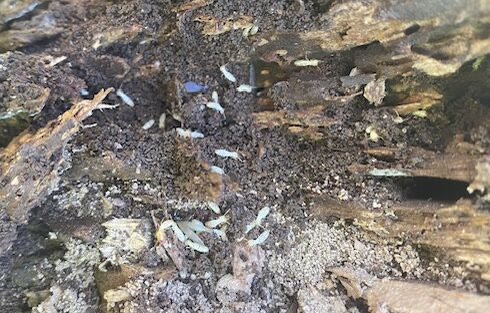
Termite workers travel daily from the wood they are eating to the main termite colony underground by routes known as Mudtubes. Very often, termite activity goes unrecognized until the termite damage to the wood is discovered during a home inspection by a home inspector or a termite inspection by a pest control service company. If termites go unnoticed in your Massachusetts home for a period of years, the cost of the wood repair is usually much greater than the cost of a professional termite treatment to eliminate the termite colony from the structure.
Termite Swarmers
Another more dramatic way to discover a major termite infestation is when thousands of termite swarmers come pouring out of your wall in the spring time to mate. Termites usually swarm in the New England area during a 2 month period from April until May. It’s usually on a warm humid day in April or May and can continue for a few weeks until all the termite swarmers have left the ground.
These new male and female termite swarmers are produced by the termite Queen when the colony reaches maturity. They are gathered up by the termite workers and pushed into the most recently used tunnels being used by the workers from the colony to the food source (wood).
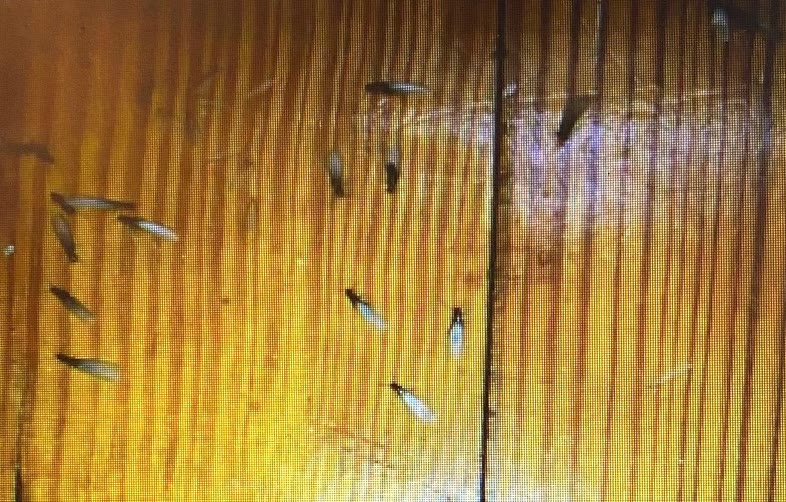
The workers leave the ends of the tunnels and continue eating the wood and the termite swarmers leave the tunnels and head for any light source. If this swarms happens during the night and a light is left on inside, the termite swarmers will mistake the inside of your house for the outside and the swarm will be all over your floor. After they swarm from your walls or your foundation the swarmers will start shedding their wings. They do this so they can mate and then try to get back into the ground to start new termite colonies. If they accomplish this before they dry-out they can live as new Kings and Queens for up to 30 years producing up to 500,000 more workers. Very often though, the termite swarmers will usually all die because they can’t get back into the ground after mating fast enough and they die from dry-out. Finding a pile of dead termites or loose wings is a sure sign that termite workers are active somewhere in the structure. Seeing signs of termite swarmers is when a termite pest inspection is definitely needed.
Termite Swarmer Identification
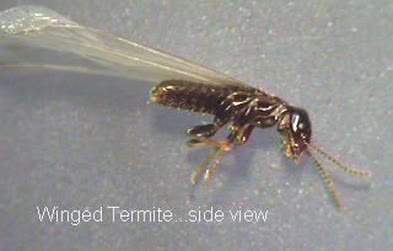
To the untrained eye, termite swarmers may appear to be small flying ants, but two things will distinguish them from flying ants. The main difference between flying ants and termites is the following. If you look closely at the zoomed up picture of the termite swarmer above, you will notice that the termite body is dark brown or black colored, straight antennae and a one piece body (Termite Swarmer with wings dropped off) (ants have 3 segments to their body). Second, you may notice whitish, clear wings on the floor which have been dropped off by the termite swarmers before mating. (carpenter ants are much larger & retain their brownish wings and have elbowed antennae).
Termite Habits
Since termites eat wood from the inside out, wood with visible external signs of termites is usually beyond salvage. Termite workers require a moist environment to survive and must return to the ground regularly to keep from drying out and dying. They maintain their moisture by traveling inside mud tunnels and by sealing the edges of wood they have eaten. Termites do not require moist wood and can eat wood that appears totally dry. Soft woods are preferred such as pine, fir and spruce, but oak flooring has also been eaten.
Treating a structure for termite extermination is an entirely different process than treating for other insects such as carpenter ants. Ants travel mostly above ground and effective treatments are usually applied to areas above ground, along with locating and exterminating the colony living in your house. Protective perimeter barriers and residuals are applied to kill off foragers. Treatment for termites differs in that we don’t look for the colony because it can be up to 200 feet away from the affected structure and deep underground somewhere above the water table, below the frost line or under the house.
Wood Destroying Insect Inspection Report
We also perform and provide Wood Destroying Insect Inspection Reports. These certified termite inspections are frequently required by mortgage companies when you refinance or buy a home, especially when a VA loan is involved. The inspector specifically looks for signs of wood-destroying insects like carpenter ants, powder post beetles and termites, but especially termites, and provides professional recommendations for any needed treatment.
Common Questions
Termite Control FAQs
Look for mud tubes, discarded wings, hollow-sounding wood, or small piles of frass. Many infestations show no obvious signs, which is why a professional inspection is the surest way to know. We offer free termite inspections.
The liquid is applied deep into the soil next to your exterior foundation — not sprayed through your living space. It is low-odor and non-repellant, and everything we use is EPA-registered and applied according to label directions.
In most cases, yes. Because the treatment is non-repellant, termite workers cannot detect it and keep tunneling straight through, carrying it back to the colony on their bodies and spreading it termite to termite by contact. Done properly it usually kills off the colony — queen included — in 30 to 60 days.
It depends on the size and construction of your home and how far the activity has spread, so we quote every termite job individually rather than working from a price list. The inspection and the quote are both free, and you will have the full price before any work starts.
Termite treatments are covered by our service agreement. Ask your inspector for full warranty terms, including what applies if you sell the house — buyers and mortgage companies often want proof of termite treatment at closing.
Service Area
Towns We Perform Termite Treatment & Inspection Services In
- Acton, MA
- Arlington, MA
- Ashby, MA
- Ashland, MA
- Ayer, MA
- Bedford, MA
- Belmont, MA
- Billerica, MA
- Boxborough, MA
- Burlington, MA
- Cambridge, MA
- Carlisle, MA
- Chelmsford, MA
- Chestnut Hill, MA
- Concord, MA
- Dracut, MA
- Dunstable, MA
- Everett, MA
- Framingham, MA
- Groton, MA
- Holliston, MA
- Hopkinton, MA
- Hudson, MA
- Lexington, MA
- Lincoln, MA
- Littleton, MA
- Lowell, MA
- Malden, MA
- Marlborough, MA
- Maynard, MA
- Medford, MA
- Melrose, MA
- Natick, MA
- Newton, MA
- Newton Highlands, MA
- North Reading, MA
- Pepperell, MA
- Reading, MA
- Shirley, MA
- Somerville, MA
- Stoneham, MA
- Stow, MA
- Tewksbury, MA
- Tyngsborough, MA
- Wakefield, MA
- Waltham, MA
- Watertown, MA
- Wayland, MA
- West Cambridge, MA
- Westford, MA
- West Medford, MA
- West Newton, MA
- Weston, MA
- Wilmington, MA
- Winchester, MA
- Woburn, MA
- Amesbury, MA
- Andover, MA
- Beverly, MA
- Boxford, MA
- Bradford, MA
- Byfield, MA
- Danvers, MA
- Essex, MA
- Georgetown, MA
- Gloucester, MA
- Groveland, MA
- Hamilton, MA
- Haverhill, MA
- Ipswich, MA
- Lawrence, MA
- Lynn, MA
- Lynnfield, MA
- Manchester-by-the-Sea, MA
- Marblehead, MA
- Merrimac, MA
- Methuen, MA
- Nahant, MA
- Newbury, MA
- Newburyport, MA
- North Andover, MA
- Peabody, MA
- Rockport, MA
- Rowley, MA
- Salem, MA
- Salisbury, MA
- Saugus, MA
- Swampscott, MA
- Topsfield, MA
- West Newbury, MA
- Boston, MA
- Brighton, MA
- Charlestown, MA
- Chelsea, MA
- Dorchester, MA
- East Boston, MA
- Hyde Park, MA
- Jamaica Plain, MA
- Revere, MA
- Roslindale, MA
- South Boston, MA
- Winthrop, MA
- Avon, MA
- Braintree, MA
- Brookline, MA
- Canton, MA
- Cohasset, MA
- Dedham, MA
- Dover, MA
- Foxborough, MA
- Franklin, MA
- Holbrook, MA
- Medway, MA
- Millis, MA
- Milton, MA
- Needham, MA
- Norfolk, MA
- Norwood, MA
- Quincy, MA
- Randolph, MA
- Sharon, MA
- Stoughton, MA
- Walpole, MA
- Wellesley, MA
- Weymouth, MA
- Abington, MA
- Bridgewater, MA
- Brockton, MA
- Carver, MA
- Duxbury, MA
- East Bridgewater, MA
- Halifax, MA
- Hanover, MA
- Hanson, MA
- Hingham, MA
- Hull, MA
- Kingston, MA
- Marshfield, MA
- Middleborough, MA
- Norwell, MA
- Pembroke, MA
- Plymouth, MA
- Plympton, MA
- Rockland, MA
- Scituate, MA
- West Bridgewater, MA
- Auburn, MA
- Berlin, MA
- Blackstone, MA
- Bolton, MA
- Boylston, MA
- Clinton, MA
- Douglas, MA
- Fitchburg, MA
- Grafton, MA
- Harvard, MA
- Hopedale, MA
- Lancaster, MA
- Leominster, MA
- Lunenburg, MA
- Mendon, MA
- Milford, MA
- Millbury, MA
- Millville, MA
- Northborough, MA
- Northbridge, MA
- Oxford, MA
- Princeton, MA
- Shrewsbury, MA
- Southborough, MA
- Sterling, MA
- Sutton, MA
- Upton, MA
- Uxbridge, MA
- Westborough, MA
- West Boylston, MA
- Westminster, MA
- Worcester, MA
Don’t see your town listed? Please call to see if we service that area.