
Security Bee Removal
Bee & Wasp
Nest Removal
Serving Eastern Massachusetts since 1993. We eliminate all types of wasps and bees and can quickly solve wasp nest and bee problems at your home, yard or business — and all our bee, wasp and hornet removal work is covered by our service agreement.
Massachusetts Stinging Insect Specialists
Bee & Wasp Nest Removal Services

We eliminate all types of wasps and bees and can quickly solve wasp nest and bee problems from your home, yard or business. All our bee, wasp and hornet removal work is covered by our service agreement.
- Carpenter Bees
- Yellow Jackets
- Bumble Bees
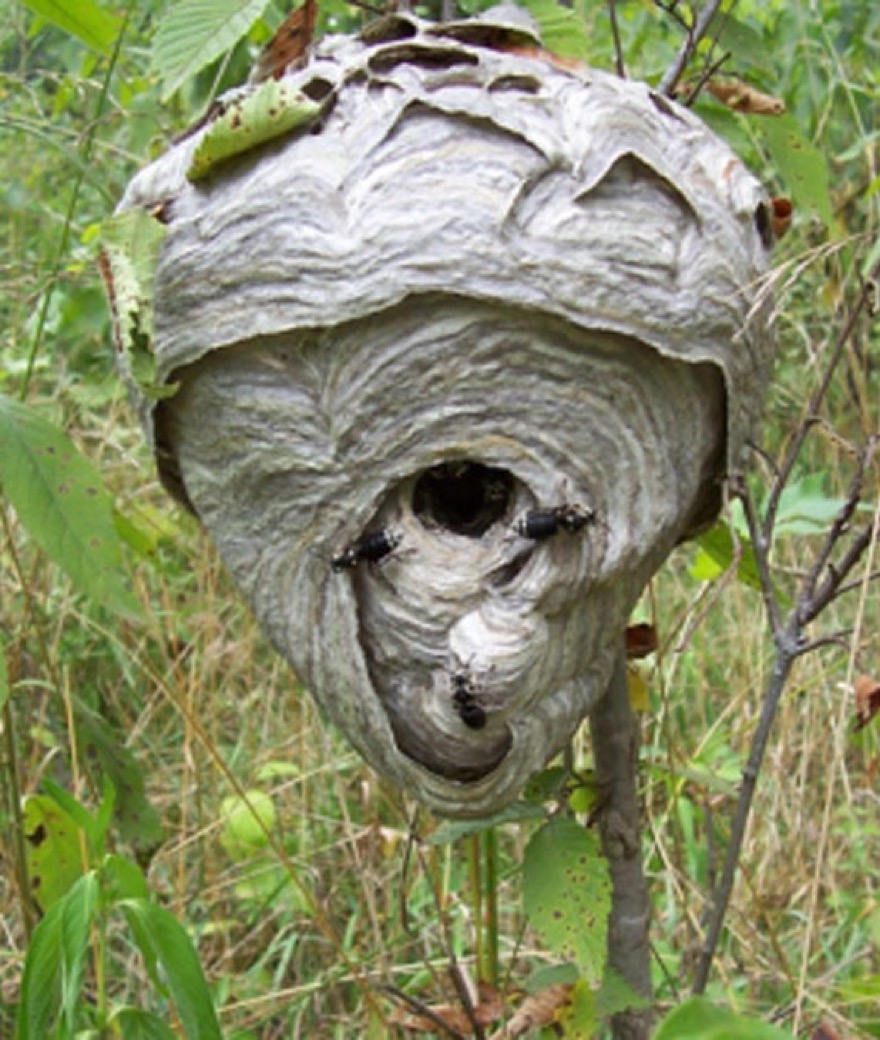
- Bald-faced Hornets
- Paper Wasps
- Digger Wasps
- Digger Bees
- European Hornets
- Cicada Killers
- Mud Dauber Wasps
*Note: do not ever seal off the entrance to a hive inside a wall.
The Problem
Yellow Jackets — the Most Common Stinging Pest in MA
Eastern yellow jackets average about 1/2 inch long, though late-hatching new queens can be a full inch. They have alternating black and yellow stripes, are not as hairy as bees, and their wings are a smoky brown. They build nests in chipmunk burrows, hollowed logs or stumps, stone walls, under or inside eaves and inside the wall voids of our homes — and the nests inside your walls can become very large by late summer.
Many people are unaware of them until cold weather starts driving them into the house. Yellow jackets, like most wasps, can sting repeatedly and will do so when threatened; only the females have stingers. They are the most common problem stinging pest in Massachusetts and cause the most cases of allergic reactions.
Before You Trim, Mow or Seal
Never seal a hive entrance
Sealing a hole in a wall only drives the colony inside the house.
Don’t spray into the hole
Aerosol pesticides are highly repellent — wasps travel the walls looking for a new way out, into your rooms, for up to 2 weeks.
Check shrubs before trimming
Look inside bushes for round paper hives before using hedge trimmers.
Check the lawn before mowing
Look for yellow jackets coming out of the ground; a mower over a burrow nest brings them out behind you.
We use special dusts
They do not cause the scattering that repellent aerosols do.
How It Works
Our Bee & Wasp Removal Process
01
Species & Nest Identification
Carpenter bee, yellow jacket, bald-faced hornet and digger wasp each need a different approach, so we identify what you have and locate the nest itself — a ground burrow, a shrub or the upper trim.
02
Treatment with Non-Repellent Dusts
The nest is the target, not the insects you can see. We use special dusts that do not cause the scattering that repellent aerosols do, so the colony is eliminated rather than moved.
03
Service Agreement Coverage
All of our bee, wasp and hornet removal work is covered by our service agreement, whether the nest is at your home, in the yard or at your business.
Insect Information
Bees, Wasps & Hornets


Carpenter bees drill 1/2 inch entrance holes in upper trim
Their branching tunnels extend about 8 inches each
Carpenter bees have a shiny upper abdomen; bumble bees are fuzzy
Carpenter bees are all one size; bumble bees vary
Carpenter bees hover at the roofline and fly erratically
Bumble bees fly near the ground in a graceful manner
Eastern yellow jackets average about 1/2 inch long
Late-hatching new queens can be a full inch long
Only female yellow jackets have stingers
Yellow jackets can sting repeatedly when threatened
European hornets reach 1.25 inches long
Large digger wasps bore tunnels about 1/3 inch wide
Differences between Bumble Bees & Carpenter Bees
The carpenter bee has a shiny upper abdomen, while the bumble bee has fuzzy hairs. Carpenter bees are all the same size, but bumble bees vary. The carpenter bee hovers around the upper rooflines of your house and flies in a quick, erratic manner; the bumble bee flies around near the ground in a graceful manner.
The carpenter bee drills 1/2 inch entrance holes in the upper trims of your house, with Y-branching tunnels extending 8 inches each. They live inside these tunnels and lay new eggs inside. If left alone, woodpeckers will eventually find them and severely damage your fascia or trim boards in the process. Sometimes you can hear them drilling and see the sawdust falling down.
Yellow Jackets — Wasps
Yellow jackets build nests in many areas: chipmunk burrows, hollowed logs or stumps, stone walls, under or inside eaves and inside the wall voids of our homes. The nests they build inside your walls can become very large by late summer, and many people are unaware of their presence until the cold weather starts driving them into the house.
Some of the worst cases of attacks have happened when someone unknowingly runs a lawnmower over a chipmunk burrow that has been taken over by a large underground yellow jacket hive — they swarm out and attack you from behind. Another unfortunate incident happens when someone using electric hedge trimmers stumbles upon a large yellow jacket hive, or a bald-faced hornet nest hidden inside a shrub, which causes them to swarm out and attack the person closest to it. Always look inside bushes and shrubs for round paper hives before trimming, and check your lawn for yellow jackets coming out of the ground before mowing.
Caution: if you see yellow jackets going into a small hole in the side of your house and you cannot see the hive, do not seal up the hole or spray a pesticide into it. That will only drive them into the house. Aerosol pesticides sold to consumers are extremely repellent, and the wasps will just travel through the walls and between the floors looking for new ways out, away from the treatment — you will then have yellow jackets coming into the house for up to 2 weeks. We use special dusts that will not cause this problem.
Bald-faced Hornets
Bald-faced hornets can quickly build large grey or brownish paper nests. They are large hornets and very aggressive: when their hive is threatened they will swarm after the attacker. They are smarter than yellow jackets and will chase you clear across the property.
A bee suit is highly recommended for bald-faced hornet removal work, and it is not uncommon for someone to be stung through one — multiple hornets will try to attack a small concentrated sensitive area so they can do the most damage. These are New England’s most feared stinging insects.
Sand Burrowing Ground Wasps & Digger Bees
There are many species of digger wasps and digger bees. The black and silver type can be seen flying low in figure-eight patterns above sand lots; they bury their eggs in the sand and then cover the holes over. There are digger bees that build interconnected tunnels under leaves in a garden or lawn area, and large colourful digger wasps that make 1/3 inch wide tunnels in hard-packed soil, such as alongside walkways. When found, these wasps should be promptly dealt with before they have a chance to multiply and spread.


Common Questions
Bee & Wasp Removal FAQs
No. Sealing the hole, or spraying a pesticide into it, only drives the colony deeper into the house. Consumer aerosols are extremely repellent, so the wasps travel through the walls and between the floors looking for another way out — which means yellow jackets in your rooms for up to 2 weeks. We use special dusts that do not cause that.
The carpenter bee has a shiny upper abdomen; the bumble bee is fuzzy. Carpenter bees are all one size, bumble bees vary. And watch where they fly: carpenter bees hover around the upper rooflines in a quick, erratic way, while bumble bees move gracefully near the ground.
They drill 1/2 inch entrance holes in the upper trim of your house, with Y-branching tunnels running about 8 inches each, and lay their eggs inside. Left alone, woodpeckers find them and tear up your fascia and trim boards getting at them. You can sometimes hear the drilling and see sawdust falling.
Yellow jackets cause the most problems and the most allergic reactions in Massachusetts. Bald-faced hornets are the most aggressive — they swarm after whoever threatens the hive and will chase you across the property, and people do get stung through a bee suit.
Yellow jacket nests inside wall voids can get very large by late summer, and many people only notice once cold weather starts pushing them into the living space. That is also when a hidden nest in a shrub or in the lawn is most likely to be hit by hedge trimmers or a mower.
Yes. All our bee, wasp and hornet removal work is covered by our service agreement, and estimates are free.
Service Area
Wasp and Bee Removal to all of Eastern MA and Southern NH
- Acton, MA
- Arlington, MA
- Ashby, MA
- Ashland, MA
- Ayer, MA
- Bedford, MA
- Belmont, MA
- Billerica, MA
- Boxborough, MA
- Burlington, MA
- Cambridge, MA
- Carlisle, MA
- Chelmsford, MA
- Chestnut Hill, MA
- Concord, MA
- Dracut, MA
- Dunstable, MA
- Everett, MA
- Framingham, MA
- Groton, MA
- Holliston, MA
- Hopkinton, MA
- Hudson, MA
- Lexington, MA
- Lincoln, MA
- Littleton, MA
- Lowell, MA
- Malden, MA
- Marlborough, MA
- Maynard, MA
- Medford, MA
- Melrose, MA
- Natick, MA
- Newton, MA
- Newton Center, MA
- North Reading, MA
- Pepperell, MA
- Reading, MA
- Sherborn, MA
- Shirley, MA
- Somerville, MA
- Stoneham, MA
- Stow, MA
- Sudbury, MA
- Tewksbury, MA
- Tyngsborough, MA
- Wakefield, MA
- Waltham, MA
- Watertown, MA
- Wayland, MA
- West Cambridge, MA
- Westford, MA
- West Medford, MA
- West Newton, MA
- Weston, MA
- Wilmington, MA
- Winchester, MA
- Woburn, MA
- Amesbury, MA
- Andover, MA
- Beverly, MA
- Boxford, MA
- Bradford, MA
- Byfield, MA
- Danvers, MA
- Essex, MA
- Georgetown, MA
- Gloucester, MA
- Groveland, MA
- Hamilton, MA
- Haverhill, MA
- Ipswich, MA
- Lawrence, MA
- Lynn, MA
- Lynnfield, MA
- Magnolia, MA
- Manchester-by-the-Sea, MA
- Marblehead, MA
- Merrimac, MA
- Methuen, MA
- Middleton, MA
- Nahant, MA
- Newbury, MA
- Newburyport, MA
- North Andover, MA
- Peabody, MA
- Rockport, MA
- Rowley, MA
- Salem, MA
- Salisbury, MA
- Saugus, MA
- Swampscott, MA
- Topsfield, MA
- Wenham, MA
- West Newbury, MA
- Avon, MA
- Bellingham, MA
- Braintree, MA
- Brookline, MA
- Canton, MA
- Cohasset, MA
- Dedham, MA
- Dover, MA
- Foxborough, MA
- Franklin, MA
- Holbrook, MA
- Medfield, MA
- Medway, MA
- Millis, MA
- Milton, MA
- Needham, MA
- Norfolk, MA
- Norwood, MA
- Quincy, MA
- Randolph, MA
- Sharon, MA
- Stoughton, MA
- Walpole, MA
- Wellesley, MA
- Westwood, MA
- Weymouth, MA
- Wrentham, MA
- Ashburnham, MA
- Auburn, MA
- Berlin, MA
- Blackstone, MA
- Bolton, MA
- Boylston, MA
- Charlton, MA
- Clinton, MA
- Douglas, MA
- Dudley, MA
- Fitchburg, MA
- Gardner, MA
- Grafton, MA
- Harvard, MA
- Hopedale, MA
- Hubbardston, MA
- Lancaster, MA
- Leominster, MA
- Lunenburg, MA
- Mendon, MA
- Milford, MA
- Millbury, MA
- Millville, MA
- Northborough, MA
- Northbridge, MA
- Oxford, MA
- Paxton, MA
- Princeton, MA
- Shrewsbury, MA
- Southborough, MA
- Spencer, MA
- Sterling, MA
- Sutton, MA
- Upton, MA
- Uxbridge, MA
- Westborough, MA
- West Boylston, MA
- Westminster, MA
- Worcester, MA
- Derry, NH
- Hollis, NH
- Hudson, NH
- Litchfield, NH
- Londonderry, NH
- Merrimack, NH
- Nashua, NH
- Pelham, NH
- Plaistow, NH
- Salem, NH
- Windham, NH
Don’t see your town listed? Please call to see if we service that area.